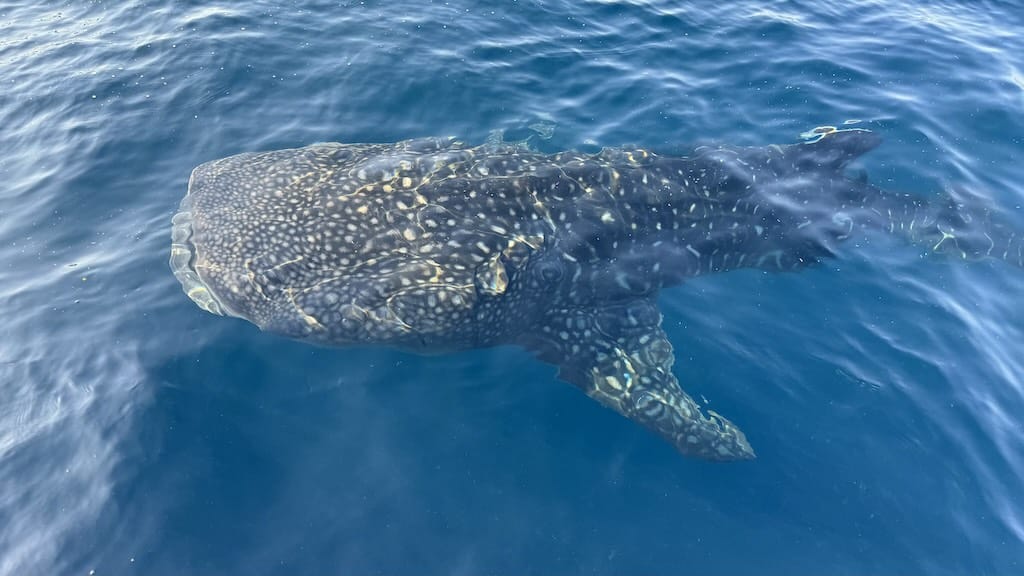
Saleh Bay and the wider SAMOTA area – Saleh, Moyo, Tambora – are one of the clearest reasons to treat Sumbawa as more than just an island to cross. This is where marine wildlife, whale sharks, island routes, and dramatic landscapes come together in a way that feels distinct from the rest of Indonesia.
It is also one of the few places in the region where a marine travel hub, a volcano landscape, and small islands sit inside the same UNESCO-recognised Biosphere Reserve. That combination makes Saleh Bay and SAMOTA a natural focus for travellers who care about both experience and context.
What is Saleh Bay SAMOTA?
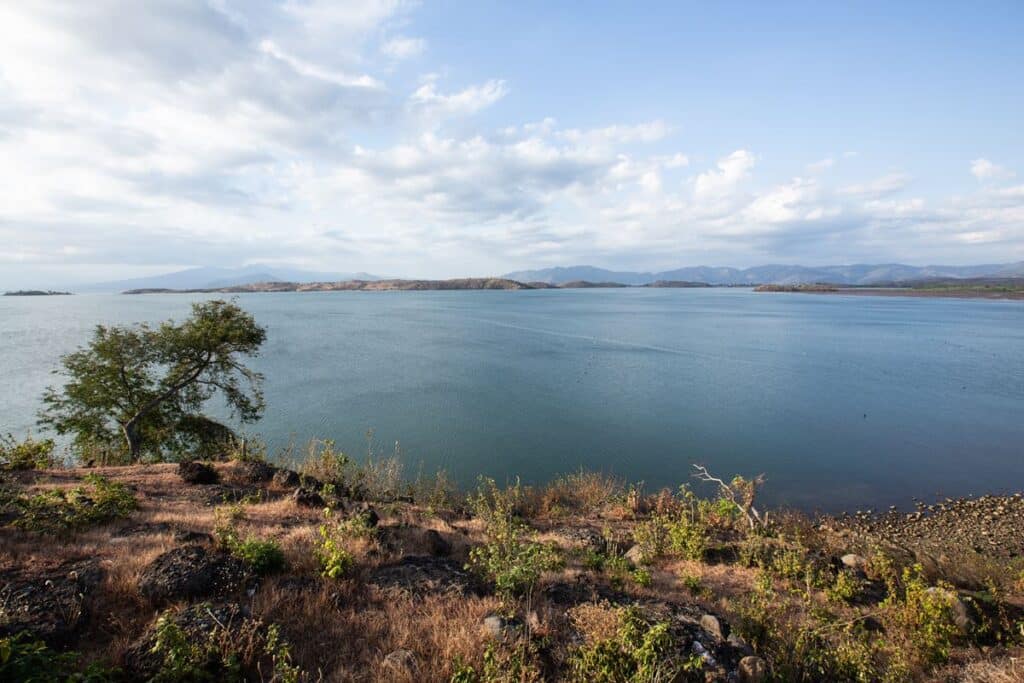
Saleh Bay sits between Sumbawa and Dompu and forms the marine heart of the SAMOTA area. SAMOTA itself is short for Saleh, Moyo, Tambora – the bay, the island, and the mountain that together define this part of Sumbawa.
The area includes small islands, mangroves, coastal and lowland forests, mountain forests, and savannah. In practical terms, that means a single trip here can move between whale shark waters, island shorelines, villages, and the slopes of Tambora, all within one wider landscape.
A UNESCO Man and the Biosphere site
Saleh Bay – together with Moyo and Tambora – has been recognised by UNESCO as a Man and the Biosphere (MAB) Biosphere Reserve.
That recognition matters for three reasons:
- It confirms the area’s importance for biodiversity, including marine life, forest ecosystems, and coastal habitats.
- It recognises the relationship between core conservation areas, buffer zones, and transition areas where people live, farm, and travel.
- It highlights the need to balance tourism, livelihoods, and conservation rather than treating the bay as only a tourism product.
For travellers and partners, it also means this is not just “another marine spot”. It is part of a global network of biosphere reserves, with a long-term focus on how people and ecosystems fit together.
Why visit Saleh Bay and SAMOTA?
Saleh Bay and SAMOTA stand out because they combine:
- A strong chance of seeing whale sharks in a natural bay setting
- Marine days that still feel linked to local life and working waters
- Island routes and coastlines that connect to wider Sumbawa journeys
- The backdrop of Tambora and eastern landscapes
- A clear conservation and biosphere story, not just a marketing label
This makes the area a good fit for travellers who want more than a single photo moment. It suits people who are interested in how a place works – ecologically, geographically, and practically – as well as what it looks like.
Whale sharks in Saleh Bay
Whale sharks are one of the main reasons Saleh Bay has become better known in recent years. The bay is recognised as one of the key whale shark locations in Indonesia, with regular sightings tied to local fishing and feeding patterns.
A good whale shark day in Saleh Bay is about more than ticking off a species. It usually includes:
- Early movement to the bay
- Time on boats that work within local rules and conditions
- Patience and flexibility around sightings and sea state
- Clear briefings on how to behave in the water and around the animals
That combination is why this part of Sumbawa has so much potential for marine and nature-led trips – and why it needs careful, responsible planning rather than quick, high-volume tourism.
Beyond whale sharks: marine days and island routes
Whale sharks are only one part of the story. Saleh Bay also offers:
- Boat-based days exploring the bay and its smaller islands
- Snorkelling and swimming in calm, protected waters when conditions are right
- Marine routes that can be combined with inland days, coastal stays, or overland journeys
- Views back to the mainland and, in some itineraries, onward to Tambora and eastern Sumbawa
These are not standalone resort activities. They are part of a wider route that needs to account for weather, tides, boat conditions, and the reality of working with local operators.
Where is SAMOTA in relation to the rest of Sumbawa?
SAMOTA sits between central and eastern Sumbawa, connecting:
- Sumbawa Besar and central routes
- The northern side of the island
- Eastern movement towards Tambora and Bima
- Wider overland routes that cross the island from west to east
That position makes it one of the most powerful “hinge” areas on the island. A well-designed trip can move from western coasts to central bases, up into Saleh Bay and SAMOTA, and then onwards toward Tambora and East Sumbawa – or the other way around.
How to reach Saleh Bay SAMOTA
Most travellers reach the Saleh Bay area by combining:
- Flights into Sumbawa Besar (SWQ) or Bima (BMU), depending on route design
- Overland travel from western or eastern routes
- Road transfers from central bases, often working through Sumbawa Besar and northern access points
- Boat departures organised around local ports and launch points in or around the bay
The exact pattern depends on the itinerary. What matters most is treating Saleh Bay as a core section of the journey rather than an afterthought. Read more on our
How does Saleh Bay fit into a wider Sumbawa trip?
Saleh Bay and SAMOTA can work in several ways:
- As the main focus of a shorter marine and nature-led trip
- As the central segment of a longer west–central–east route
- As a bridge between marine time and Tambora or eastern travel
- As a specialist segment inside a custom itinerary for small groups or private trips
The best journeys usually give the bay enough time – at least a few days within the broader route – and avoid forcing it in between two long driving days.
Who is Saleh Bay SAMOTA best suited to?
Saleh Bay and SAMOTA suit travellers who:
- Are genuinely interested in marine life and nature
- Are comfortable with early starts, boat days, and working with real conditions
- Prefer grounded, locally linked experiences over heavily packaged tourism
- Want to combine marine time with inland or volcano landscapes
- Value the idea of travelling within a UNESCO-recognised biosphere reserve
It may be less suitable for travellers who want tight schedules, short transfers every day, or fully polished infrastructure at every step.
Responsible travel in a biosphere reserve
Because Saleh Bay and SAMOTA form a UNESCO Biosphere Reserve, responsible travel is not just a nice extra – it is part of the logic of the place.
In practice, this means:
- Respecting local rules and guidance around whale sharks and marine activity
- Choosing operators who keep group sizes and behaviour under control
- Understanding that weather and sea conditions can override fixed plans
- Recognising that this is a living landscape and seascape, not a zoo or theme park
It also means recognising that money spent in the area can help support local livelihoods, conservation work, and better long-term management when it is channelled carefully.
How Wild Sumbawa works in Saleh Bay SAMOTA
Wild Sumbawa treats Saleh Bay and SAMOTA as one of the island’s main authority clusters. That shows up in:
- Field-tested understanding of routes, seasons, and practical access
- Careful matching of whale shark and marine experiences to the right travellers
- Trip design that combines the bay with central and eastern routes rather than isolating it
- A focus on responsible, small-scale experiences in line with the area’s biosphere status
The aim is to help isitors treat Saleh Bay as more than just a single-day add-on – and to keep the quality of experience and impact as high as possible.
FAQ
What is SAMOTA?
SAMOTA is short for Saleh, Moyo, Tambora – the bay, the island, and the mountain that together form a UNESCO Man and the Biosphere Reserve in Sumbawa.
Is Saleh Bay a UNESCO site?
Saleh Bay, together with Moyo and Tambora, forms the Saleh–Moyo–Tambora (SAMOTA) Biosphere Reserve, recognised by UNESCO under its Man and the Biosphere Programme.
Are whale sharks guaranteed in Saleh Bay?
No responsible operator can guarantee whale sharks, but Saleh Bay is one of Indonesia’s stronger whale shark locations, with regular sightings linked to local conditions and fishing activity. Good planning increases the chances, but nature never runs on a fixed schedule.
How many days should I spend in Saleh Bay SAMOTA?
Most travellers should plan at least two to three days in the Sales Bay / SAMOTA area if whale sharks and marine days are a priority, and longer if they also want to connect the bay with inland or eastern routes.
Can Saleh Bay be combined with Tambora?
Yes. In fact, combining the marine focus of Saleh Bay with the landscapes of Tambora is one of the strongest ways to build a SAMOTA-based trip, especially for travellers interested in both sea and mountain environments.
Is Saleh Bay suitable for families?
Saleh Bay can work for families who are comfortable with boats, early starts, and flexible plans. The key is to match the trip design to the family’s comfort level, ages, and expectations.
- Regions of Sumbawa
- Central Sumbawa
- East Sumbawa
- Sumbawa Travel Guide
- Practical Travel Information
- Things to Do in Sumbawa
- Attractions of Sumbawa