
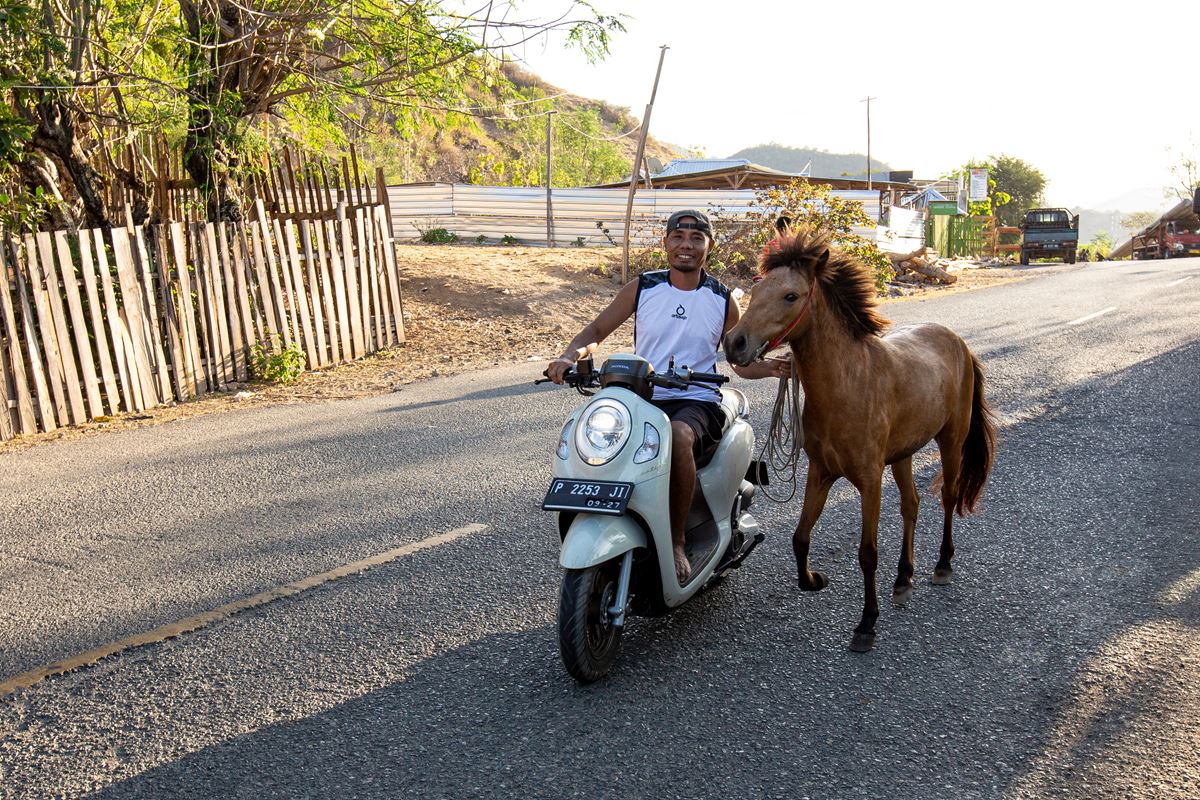
Planning a trip in Sumbawa usually gets easier once the practical side is clear. The island is large, movement takes time, and the quality of a route often depends less on how much you try to include and more on whether the timing, transport, and pace make sense in real conditions.
This page brings together the practical side of travel in Sumbawa – how to reach the island, how to move around, what to expect from roads and sea conditions, when different areas work best, and who the island is likely to suit.
How to get to Sumbawa
Sumbawa can be reached in several ways, and the best entry point depends on which part of the island you want to use as the starting point for the trip.
Arriving from Lombok
For many travelers, the western side of Sumbawa is the most natural arrival point from Lombok, especially when the trip begins with West Sumbawa, surf zones, coastal stays, or a west-to-east overland route.
This is often the most practical option for travelers already moving through the Nusa Tenggara chain and wanting to continue overland rather than fly.
Flying into Sumbawa
Flights can make sense when travelers want to reduce overland time, start closer to a particular hub, or build a shorter itinerary around one region.
Depending on the route, flying may suit travelers heading toward Sumbawa Besar, Bima, or an itinerary that needs a more direct start or finish.
Arriving from the east
For routes linked with Flores, Komodo, Bima, Sape, or East Sumbawa, arriving from the eastern side can sometimes make more sense than starting in the west.
This is especially useful when the trip is being built around Tambora, eastern coastal districts, or a wider overland route across more than one island.
Getting around the island
Sumbawa is not an island where travelers should assume short distances mean short travel times.
Road travel is central to the experience, and how well a trip works often depends on understanding where the longer stretches are and when it is better to stay put rather than keep moving.
Private road transport
For many custom and multi-stop trips, private transport is the simplest and most reliable way to move between regions, surf zones, ports, inland areas, and marine departure points.
It gives the route more control and usually allows for clearer pacing, especially where public options are limited or where the trip includes luggage, surfboards, or mixed travel interests.
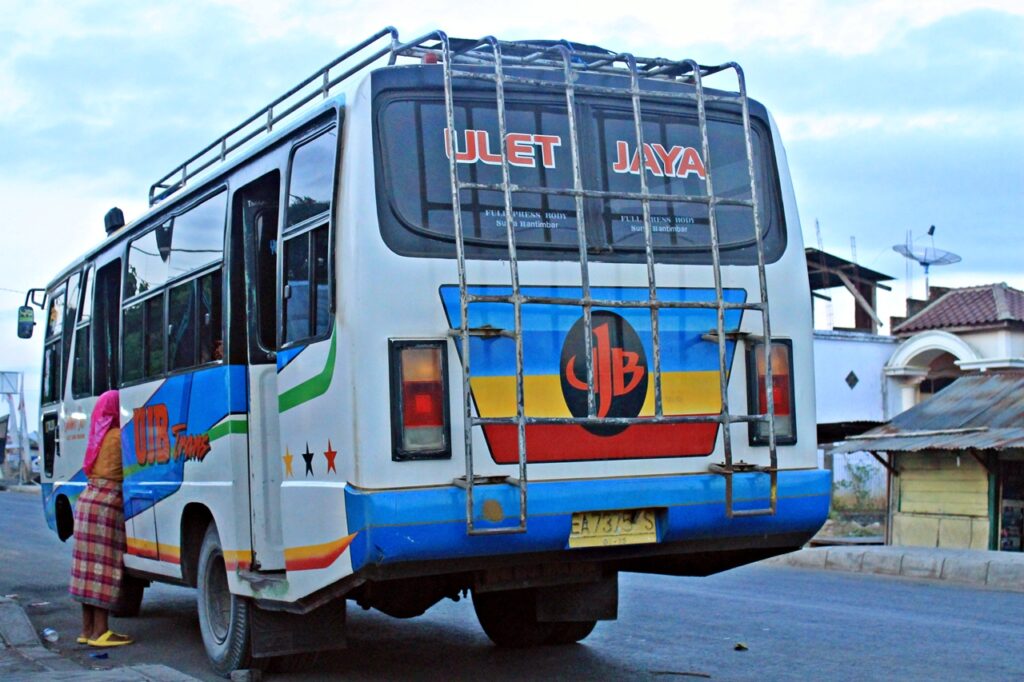
Shared and local transport
Local transport can work for some travelers, though it usually requires more flexibility, more patience, and a greater tolerance for changing schedules and less direct routing.
For shorter holidays or multi-part itineraries, that trade-off may not always be worth it.
Boats and marine transfers
Marine experiences in Sumbawa often depend on local boats, small departure points, and weather-aware timing rather than fixed tourism infrastructure.
This matters most around Saleh Bay, island trips, and north coast routes, where sea conditions, tides, and local judgement can shape what is possible on a given day.
Road realities and travel times
One of the easiest ways to weaken a Sumbawa itinerary is to underestimate road time.
The island’s distances are real, and even when the route is straightforward on a map, the day may still involve long hours, changing road surfaces, town traffic, mountain stretches, or pauses that are hard to predict exactly.
What that means in practice
A route that looks comfortable on paper can become tiring when it stacks several long travel days too closely together.
That is why Wild Sumbawa puts so much weight on realistic timings, transfer logic, and using fewer bases more intelligently when needed.
Why route shape matters
The strongest itineraries usually work with the geography rather than against it.
That can mean treating Central Sumbawa as a bridge, giving East Sumbawa more time than expected, or resisting the urge to force west, centre, east, and marine travel into a window that is simply too short.
Seasons, weather, and sea conditions
Sumbawa changes with season, swell, rainfall, and local conditions, and some parts of the island are more sensitive to those shifts than others.
This does not mean travel becomes impossible at certain times. It means expectations, timing, and route choices need to stay tied to real conditions rather than fixed assumptions.
Surf, swell, and exposed coasts
Surf routes and exposed coastal stays are naturally more sensitive to swell, wind, and sea state.
A good surf trip depends on matching season, coast, and experience level rather than assuming the same setup works all year.
Marine travel and bay conditions
Marine days, boat access, and wildlife-related outings need a little humility in the planning.
Weather, visibility, wind, local boat conditions, and timing can all change what is sensible, especially around Saleh Bay and other marine sections of a route.
Rain, heat, and comfort
Travel comfort can shift through the year depending on rain, road conditions, humidity, and how remote the route is.
For some travelers, that is part of the appeal. For others, it means the itinerary should be built with more rest, shorter transfer blocks, or fewer moving parts. Fair enough.
Accommodation expectations
Accommodation in Sumbawa ranges from simple local stays to more comfortable small hotels and beach properties, though the island is not defined by a thick layer of polished international-style lodging.
In many parts of the island, the better question is not “what is the most luxurious option?” though “what kind of stay fits this route best?”
Surf bases and coastal stays
Surf areas and quieter coastal zones often work best with simple, functional accommodation close to the experience itself.
That can be part of the charm, though it also means travelers should expect comfort levels to vary between regions.
Town stays and route support bases
Places like Sumbawa Besar or Bima may work less as dream destinations in themselves and more as useful bases within a wider route.
That practical role matters, because a comfortable town stop at the right point in the itinerary can hold a trip together.
Village and homestay experiences
Homestays and village-based stays can add depth, context, and local connection to a journey when they are matched well to the traveler and the route.
They are often better for people who value atmosphere, hospitality, and place over polished facilities.
Safety, comfort, and travel style
Sumbawa is very rewarding for the right traveler, though it is usually best approached with realistic expectations.
Comfort here often comes less from frictionless infrastructure and more from good planning, good pacing, and choosing the right route for the people taking it.
Physical demands
Some parts of Sumbawa involve long drives, early departures, boat transfers, hot conditions, reef environments, uneven paths, or trekking sections.
That does not make the island extreme, though it does mean some trips are better suited to travelers who are fairly comfortable with active days and a bit of unpredictability.
Families, mixed groups, and softer routes
Sumbawa can still work well for mixed-interest groups, couples, and travelers who do not want every day to be physically demanding.
The key is route selection – slower marine sections, shorter inland outings, better-spaced transfers, and more low-intensity days can shift the entire feel of the trip.
Health and preparation
Travelers should come prepared for heat, sun, movement, and the everyday practicalities of being on a large island where services may be more spread out than in heavily developed destinations.
Nothing dramatic. Just better to arrive prepared than surprised.
Connectivity, flexibility, and expectations
Travel in Sumbawa usually goes best when people leave a little room for adjustment.
Connections can shift, weather can alter marine plans, roads can take longer than expected, and some of the best local moments come precisely because the trip is not being forced too hard.
Why flexibility matters
A rigid schedule can make the island feel harder than it is.
A well-shaped schedule, with some breathing space, usually makes the same route feel calmer, richer, and far more enjoyable.
Why local guidance matters
This is one of the reasons Wild Sumbawa focuses so much on realistic planning, field-tested route logic, and clear communication about changing conditions.
A good plan is not only about what you want to include. It is also about knowing what to leave out, what to move, and what deserves more time.
Who Sumbawa suits
Sumbawa suits travelers who want a trip with more ground under it.
The island is a good fit for people who value space, movement, local texture, marine and inland contrast, and places that still feel shaped by everyday life rather than mass-tourism choreography.
Usually a good fit
- Travelers comfortable with longer road movement and varied conditions.
- Surfers, trekkers, marine-focused travelers, and people who like overland routes.
- Travelers looking for a more grounded island experience.
- Small groups and partners who want custom route support rather than off-the-shelf planning.
May not be the best fit
- Travelers wanting short, polished, high-comfort hops every day.
- Visitors expecting Bali-style tourism infrastructure.
- People with very limited time who still want to cover the full island.
No problem if that is not the right match. Better to know early.
How we help with practical travel information Sumbawa
Wild Sumbawa uses practical information as part of trip design, not as a dry appendix after the exciting part.
Access, roads, seasonality, boat timing, accommodation character, and local knowledge all shape whether a trip feels smooth, rushed, shallow, or well-judged.
That is why we build routes with realistic transfer times, clear regional logic, and honest conversations about comfort, pace, and what each part of the island can genuinely support at the time of travel.
Related pages
Use Contact Trip Planning when you want help turning these realities into a workable trip.
Read the Sumbawa Travel Guide for route logic, trip length, and how the island fits together.
Explore Regions of Sumbawa for west, central, east, and Saleh Bay SAMOTA page links.